


Environment Dimension

WHA Group is committed to minimizing environmental impacts arising from our operations while supporting sustainable industrial development. The Group manages key environmental aspects through systematic policies, robust management systems, and responsible operational practices that prioritize resource efficiency, pollution prevention, and climate resilience. Environmental considerations are integrated into the planning, development and management of our businesses to ensure responsible use of energy, water, and materials, while reducing greenhouse gas emissions and other environmental impacts. Through these efforts, WHA Group strives to protect the environment, enhance long-term ecosystem resilience and support the transition toward a low-carbon and circular economy.

This Environmental Dimension’s key areas include Environmental Policy and Management System, Climate Strategy, Energy Management, Water Management, Waste Management, Air Emission Management, and Biodiversity and No Deforestation. In 2025, Climate Strategy, Energy Management, Water Management, and Waste Management have been identified as high material topics, reflecting their critical role in improving resource efficiency, advancing circularity, reducing environmental impacts, and supporting the transition toward a low-carbon and sustainable business.

Environmental Management Approach

WHA GROUP COMMITS TO ACHIEVING

NET ZERO GREENHOUSE GAS EMISSIONS BY 2050

WHA Group is committed to conducting business while creating sustainable growth with all stakeholders by giving importance to environment, social and good governance practices. One of the key issues that the Company determines to achieve is to accelerate sustainable climate change action to solve greenhouse gas and global warming issues by reducing greenhouse gas emissions as well as building important infrastructures such as promoting the use of renewable energy and using relevant technologies and innovations throughout the Group's value chain. These ambitious actions will be in line with global trends in responding to climate change issues including Thailand's goal of achieving carbon neutrality by 2030 and net zero greenhouse gas emissions by 2050.
Circularity
Commitments
2030
50%
Green procurement
2050
100%
Circularity
Nature
Commitments
2030
70%
Recirculated Wastewater
2050
100%
Recirculated Wastewater
No Biodiversity
Net Loss
within Manageable Boundaries
Biodiversity
Net Positive Impact
Drone Technology
WHA Group is currently studying the use of drone technology in the road and traffic monitoring process during rush hours in 2021.

United Nations Sustainable Developments Goals :

ECO-Industrial Town Development
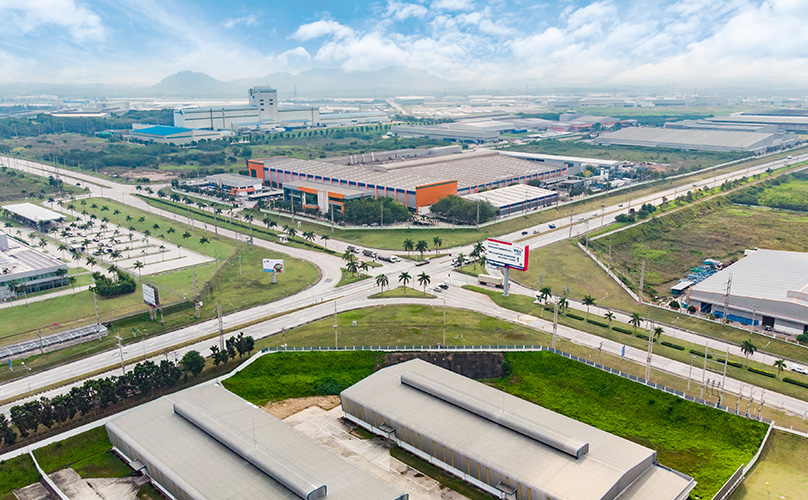
Eco-Industrial Town is an initiative implemented by the IEAT to promote and gear the economic development and environmental sustainability of industrial estates.

United Nations Sustainable Developments Goals :

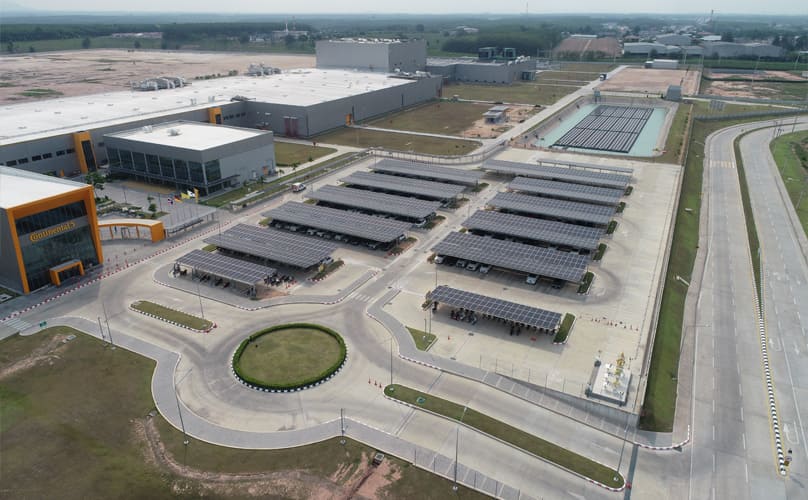
Solar PV ECO System at The Continental Tyres Factory in Rayong
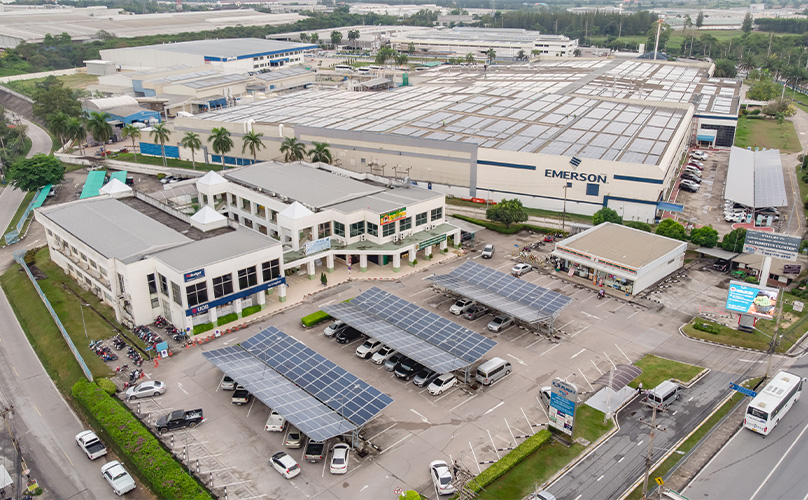
The solar PV ECO system is for the tires manufacturing facility of Continental, located in WHA Eastern Seaboard Industrial Estate 4, comprising a floating solar system on the factory's water pond, a solar rooftop system on its factory buildings as well as a solar car park.

United Nations Sustainable Developments Goals :

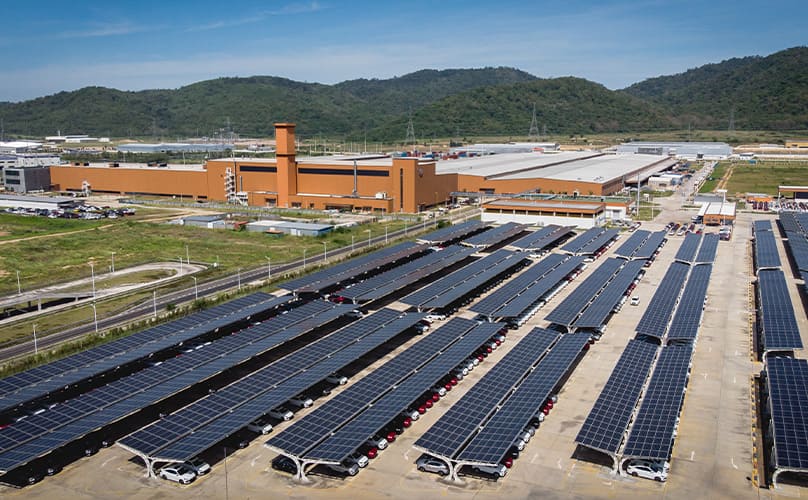
Thailand's Largest Solar Carpark
WHAUP officially delivered the solar carpark at SAIC Motor Company - CP Co., Ltd. (SAIC MOTOR-CP) with solar installed capacity of 4.8 MW. By end of 2021, the second phase of the project was completed.

United Nations Sustainable Developments Goals :

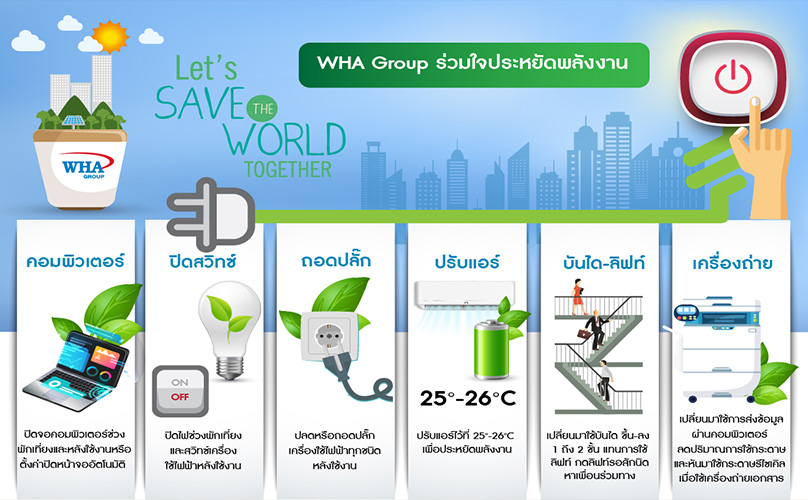
Energy Saving in Office Buildings
Apart from energy saving schemes conducted at the industrial estates, all business hubs also acknowledge and actively support the directional movement to reduce energy consumption.

United Nations Sustainable Developments Goals :
Energy Saving in Industrial Complex
To increase equipment efficiency and support the achievement of the energy reduction target, WHA Group has replaced a total of 8,182 LED installed throughout the Group's logistics properties and industrial estates till now.

United Nations Sustainable Developments Goals :

Solar Rooftop
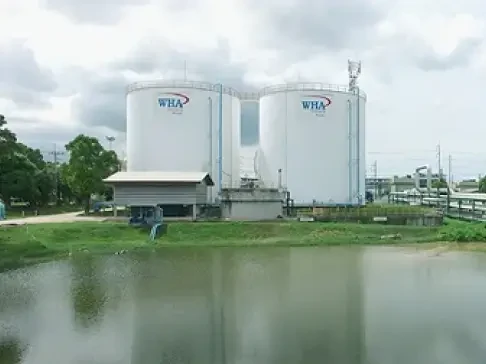
WHA Group prioritizes the installation of solar panels within the Group's own operations to increase the use of renewable energy consumption. In 2021, renewable energy generated from the installed solar rooftop panels at the water treatment facility at WHA Eastern Industrial Estate (WHA EIE) were able to reduce conventional electricity by 315,857 kWh per year, thus offset 177 tCO2e of GHG Scope 2 emission.

United Nations Sustainable Developments Goals :

Vehicle Management System
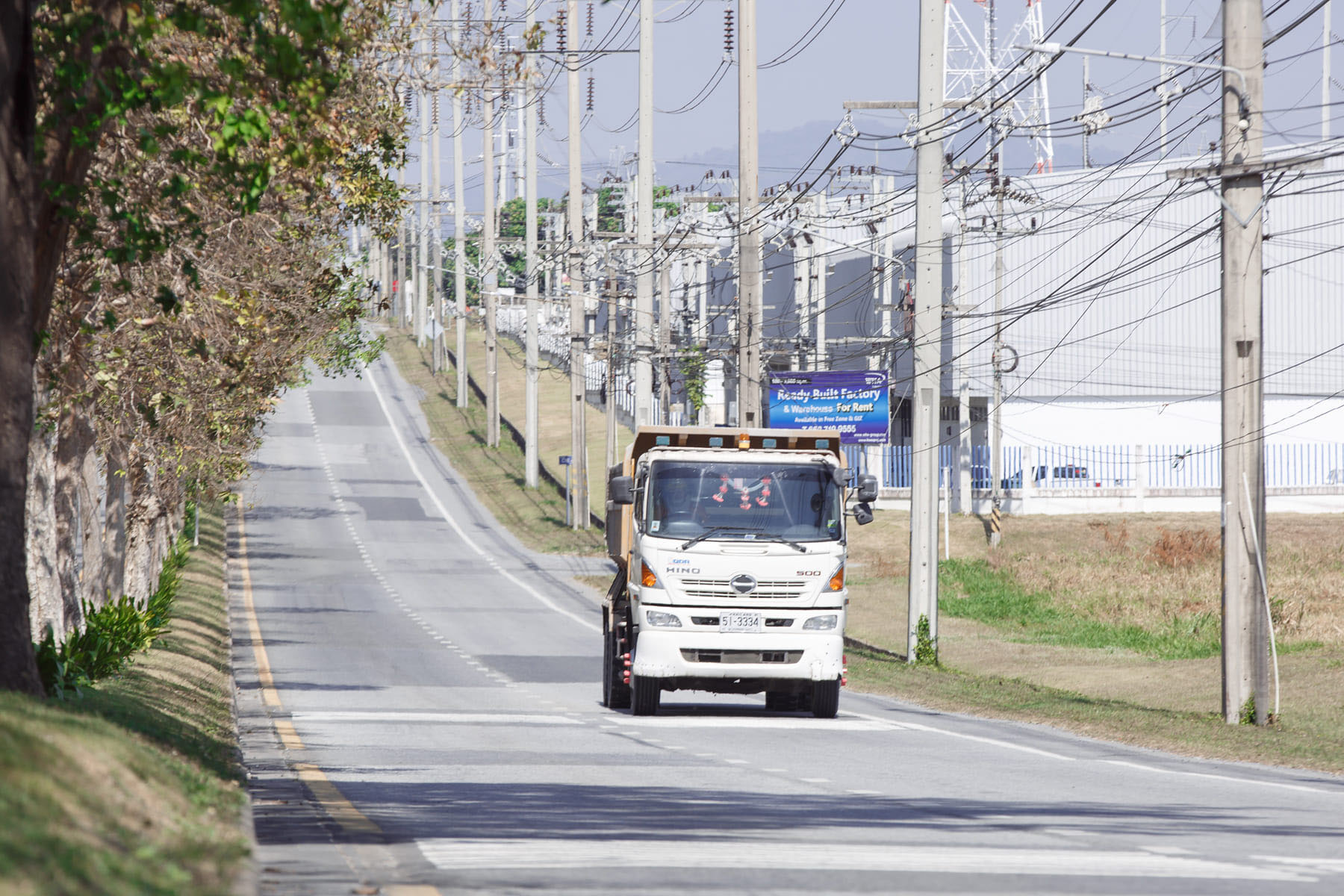
Traffic congestion outside industrial estate during rush hour cause air pollution. WHA Group has invested heavily on smart ecosystems and technologies including the permanent tracking for vehicles and visitors, and drones for traffic management for managing and decreasing traffic congestion as well as pollution.

United Nations Sustainable Developments Goals :

Control Cable Alarm System
Implementing Control Cable Alarm system, as stated in the Innovation Management chapter, is one of the initiatives that could help reduce air pollution. Installation of CCTVs with motion detecting function at the wastewater pumping stations can eliminate the need for employees to conduct on-site monitoring that required fuel usage for travelling processes.

United Nations Sustainable Developments Goals :
Adaptive Traffic Control
WHA Group has installed an Adaptive Traffic Control System that uses CCTV to monitor the traffics and calculate the number of vehicles in the industrial complex.

United Nations Sustainable Developments Goals :

Waste Management Collaboration Project : Hamper and Laptop Case
WHA incorporates with PTT Global Chemical (GC) to collect used PET bottles from school under ThinkCycle Bank Project and collect water hyacinth from wastewater treatment system; polishing pond of ESIE, WHA ESIE1 and WHA ESIE2 forming to yarn and produce hampers and laptop cases.

United Nations Sustainable Developments Goals :
Reduce Dependency on Plastics
Served together with comfort and convenience, singleuse plastics without proper management are the manmade predators in the ecosystem, imposing potential irreversible, global impacts on vital climate processes and biodiversity levels.

United Nations Sustainable Developments Goals :
Other Dimensions

Governance & Economic
Explore More