





Sustainability Vision
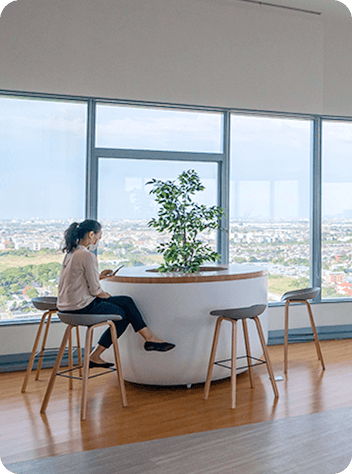
Be a leading force in shaping Thailand’s sustainable future, creating immediate impact and long-term value for all stakeholders through the integration of environmental stewardship, social empowerment, and responsible governance across all aspects of operations.

|
Strategic Directions
|
Key Targets
|
|
 |
Environmental Stewardship
|
|
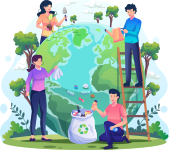
| Commit to reducing our environmental footprint and accelerate Thailand’s transition to a low-carbon, circular economy with a focus on both climate mitigation and adaptation through 5 approaches which are Decarbonization Solutions, Green Construction, Water Conservation, Circular Economy and Waste Management and Nature and Biodiversity |
|
|
 |
Social Empowerment
|
|
| Uplift communities and ensure a safe, inclusive, and engaging environment for employees, partners, and customers. |
|
|
 |
Responsible Governance and Innovation
|
|
| Uphold ethical business conduct and transparency, ensuring long-term resilience and stakeholder trust. |
|
|
 |
Leadership for Green Economy
|
|
| Create new green and future-proof business models that generate long-term value for people, planet, and performance. |
|
|
 |
Enablers for Sustainable Thailand
|
|
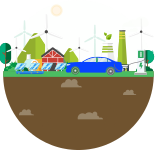
| Play a catalytic role in Thailand’s transition to a New Economy with digitalization, decarbonization, decentralization, and circularity. |
|
|