






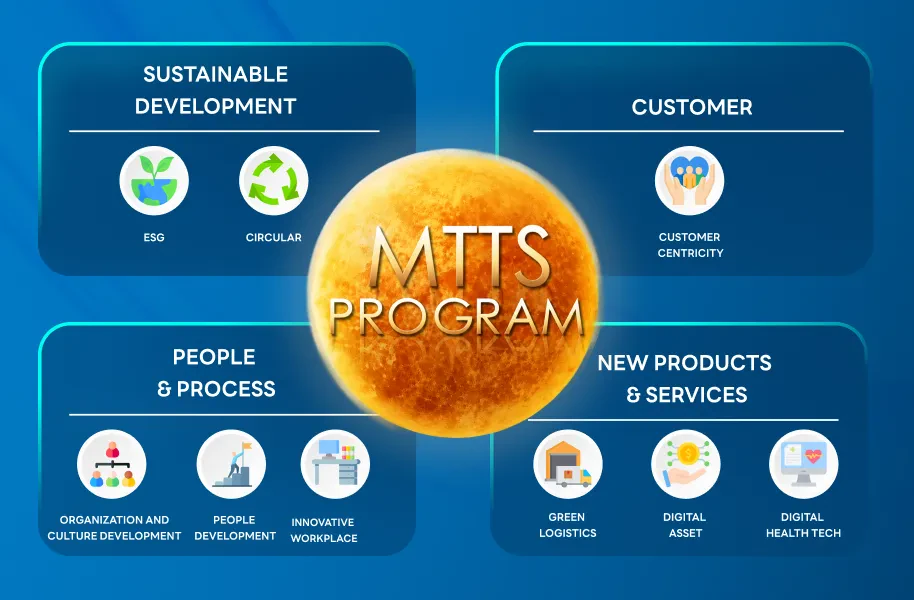
WHA Group has continuously developed various projects under a sustainability framework. Among these, the circular economy initiative is a key project under the “Mission to the Sun” program. The company has established strategic plans to support business transformation, focusing on maximizing resource circulation, minimizing the use of new resources, and achieving the goal of zero waste.
Zoom on Circular Economy
By adopting Circular Economy principles, WHA maximizes resource efficiency through the reduction of material, energy, and water consumption. This not only lowers operational costs but also mitigates risks from resource dependency. Simultaneously, it aligns with corporate sustainability goals to tackle global challenges—including climate change, biodiversity loss, and waste pollution—while balancing business growth with long-term environmental stewardship.
This approach further opens opportunities to develop new solutions and services for customers, such as waste management, renewable resources, and sustainable infrastructure.
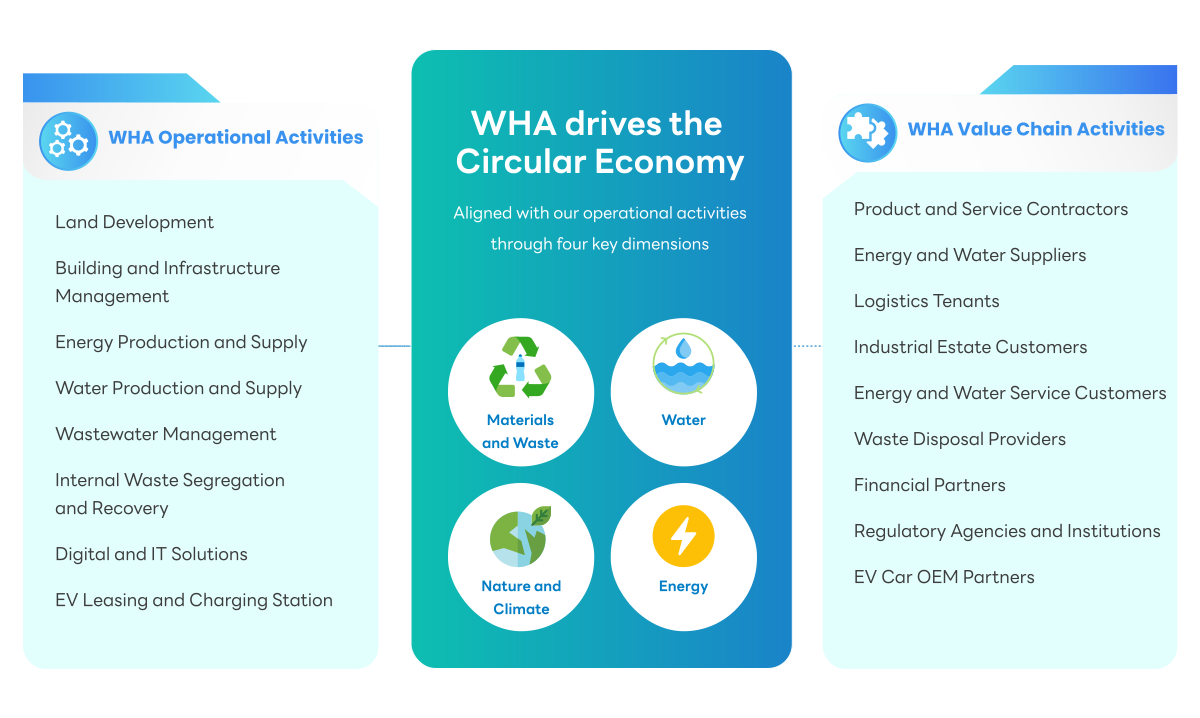
As an Industrial Estate Developer, Logistics Provider, Utilities and Power Operator, Digital Operator and Mobility Operator. WHA is also able to drive the circular economy across the entire value chain by connecting and promoting engagement among all stakeholders, extending far beyond the organization itself.
WHA drives the Circular Economy through four key dimensions, which align with the company's operational activities:
WHA’s Circular Economy Long-term Ambitions & Targets


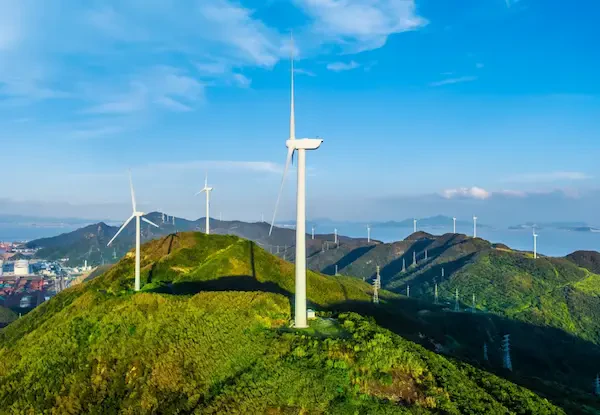

Circular Economy for Sustainable Development
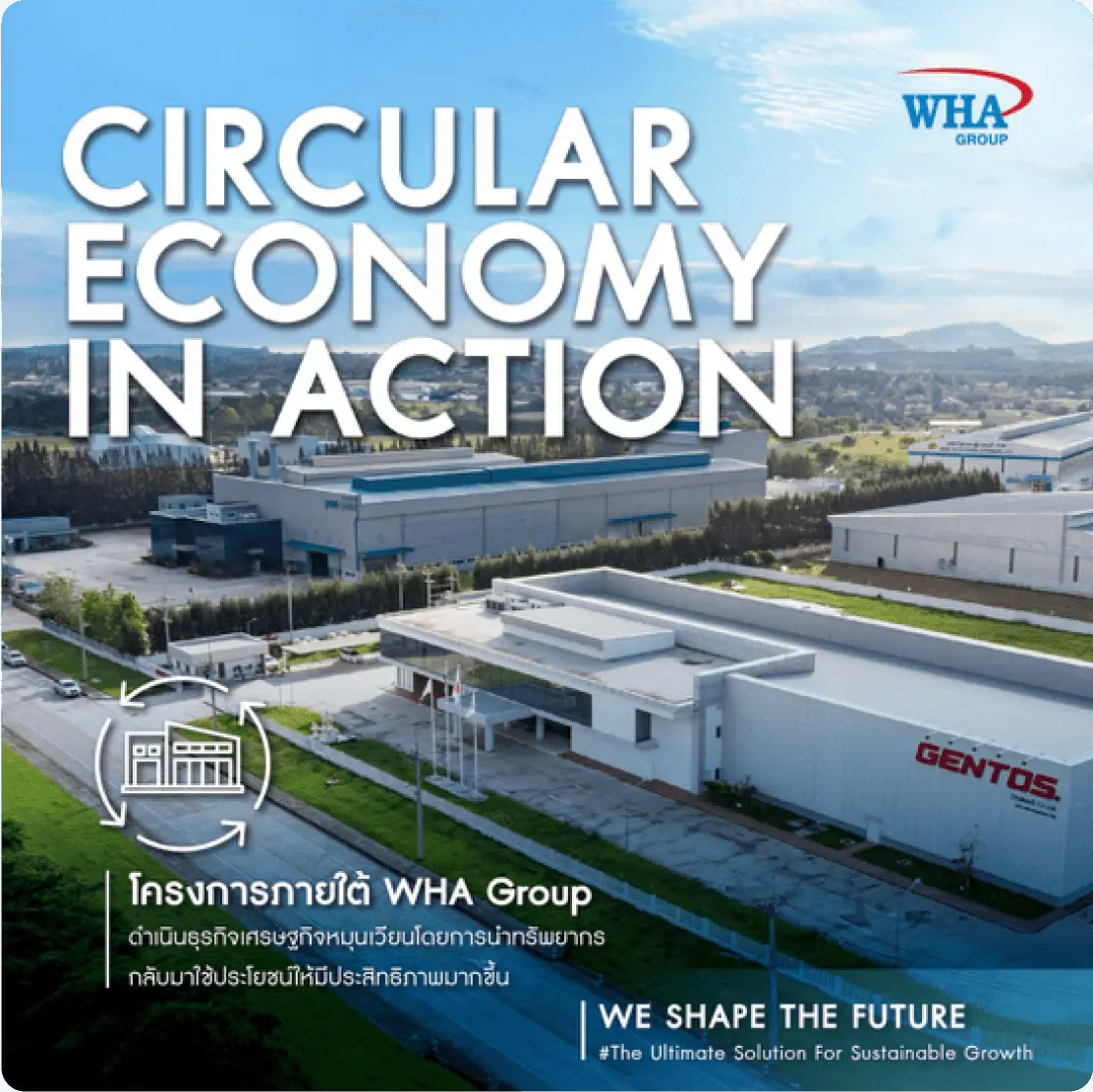
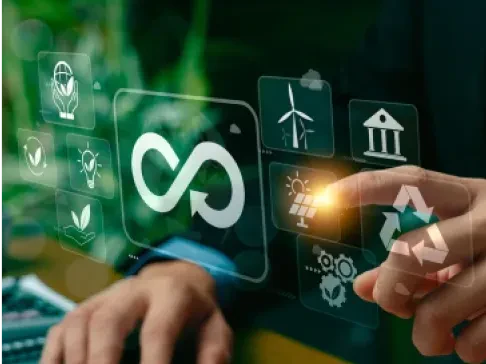
WHA Group prioritizes the integration of Circular Economy principles across its value chain, focusing on reducing resource consumption, waste generation, and environmental impact through improved resource efficiency and innovation. The company aims to extend the lifespan of materials, promote reuse, and maximize resource value throughout their lifecycle.
Through this approach, WHA Group is advancing toward sustainable development by supporting responsible resource management and reducing pressure on natural systems. These efforts contribute to building a more sustainable and resilient future, while creating long-term value for the business, communities, and the environment.
WHA Group's Circular Economy Initiatives in Action
WHA Group translates Circular Economy principles into action through its business operations and various corporate initiatives. These projects reflect the company's commitment to waste reduction, resource efficiency optimization, and the promotion of sustainable practices across the entire value chain. The following examples highlight WHA's key Circular Economy initiatives.
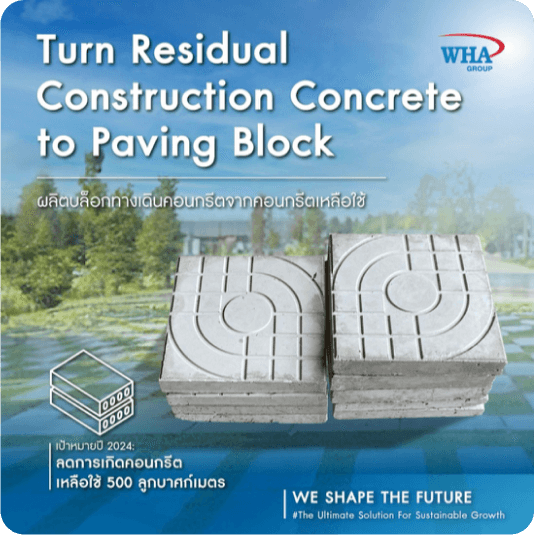
Turning Residual Construction Concrete into Paving Blocks
This initiative aims to transform waste concrete into durable paving blocks, reducing the environmental impact of construction activities.
Progress: Recycle Construction Concrete to Paving Blocks.
Achieved a reduction of 60.35 tons of concrete and produced 1,064 recycled paving blocks.
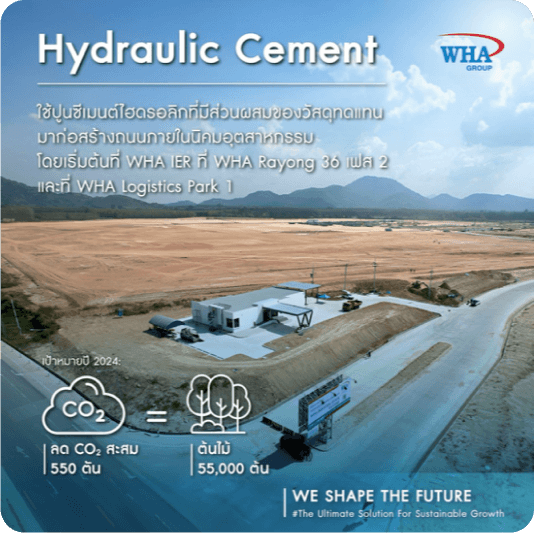
Utilizing Hydraulic Cement with Waste Materials for Road Construction
WHA Group is incorporating hydraulic cement containing waste materials into road construction within its industrial estates. Locations: Initially implemented at WHA IER, WHA Rayong 36 Phase 2, and WHA Logistics Park 1.
Progress: By using 34,944 tons of hydraulic cement in 2025, WHAID and WHALG are able to reduce CO2 emissions by approximately 530 tCO2e.
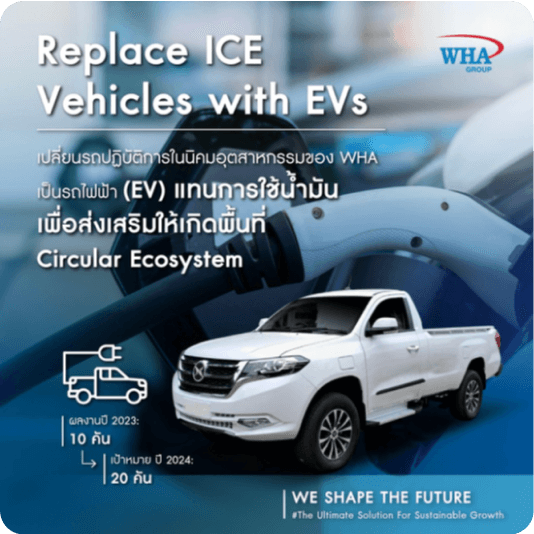
Replacing ICE Vehicles with Electric Vehicles (EVs)
WHA Group is transitioning to electric vehicles (EVs) for operational use within its industrial estates, promoting a cleaner and more sustainable environment.
Target: The goal for 2026 is to expand the EV fleet to 65 vehicles and EV Adoption rate to 42%.
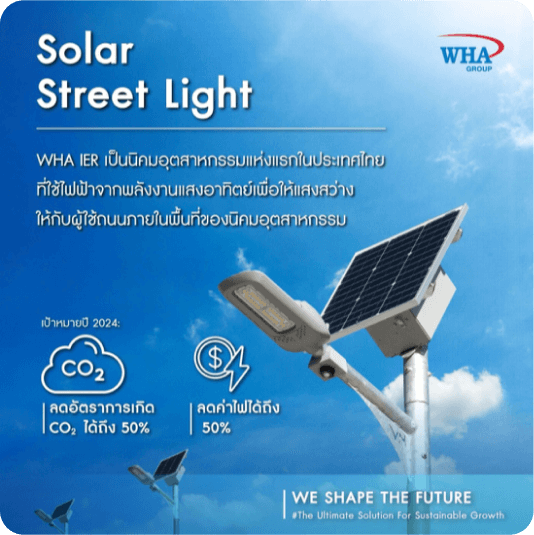
Solar Street Lighting at WHA IER
WHA IER has become the first industrial estate in Thailand to utilize solar-powered street lighting, reducing reliance on grid electricity.
Impact: The project aims to achieve a 50% reduction in CO2 emissions and a 50% reduction in electricity costs.
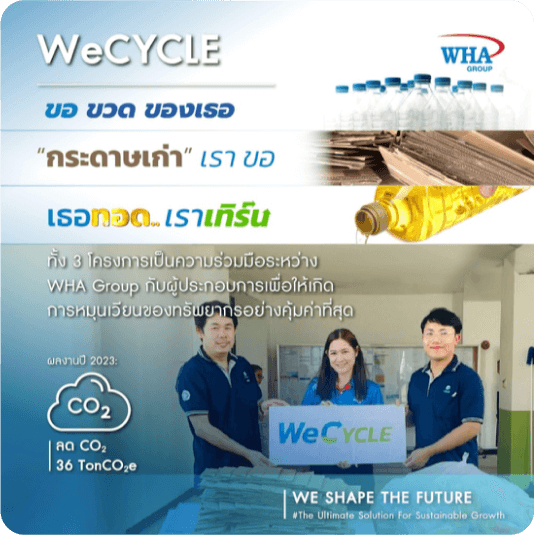
WeCYCLE: Resource Recovery and Upcycling
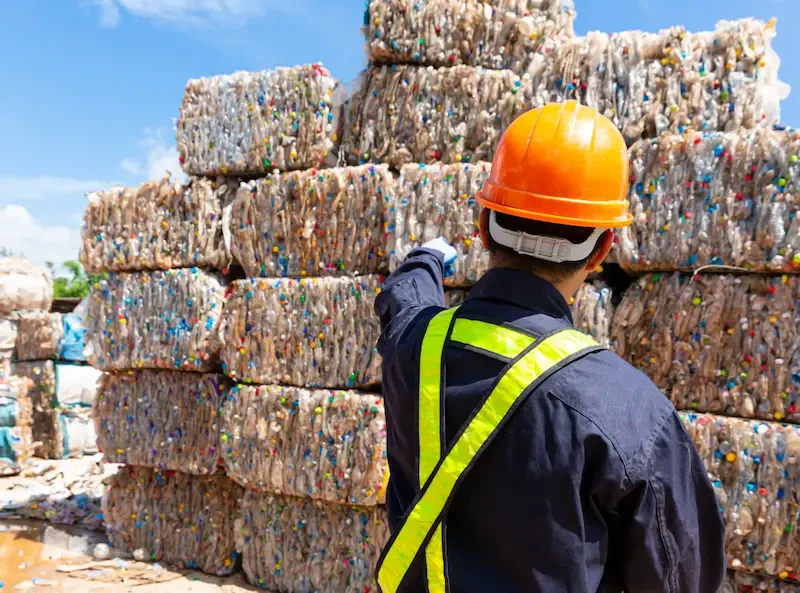
WeCYCLE is a collaborative initiative between WHA Group and tenants to collect and upcycle waste materials, promoting a circular resource economy.
Materials: The project focuses on collecting and upcycling plastic bottles, waste paper, and cooking oil.
Achievement: In 2026, the project diverted 594 tonnes of CO2e, 262 tons of total waste reduction.
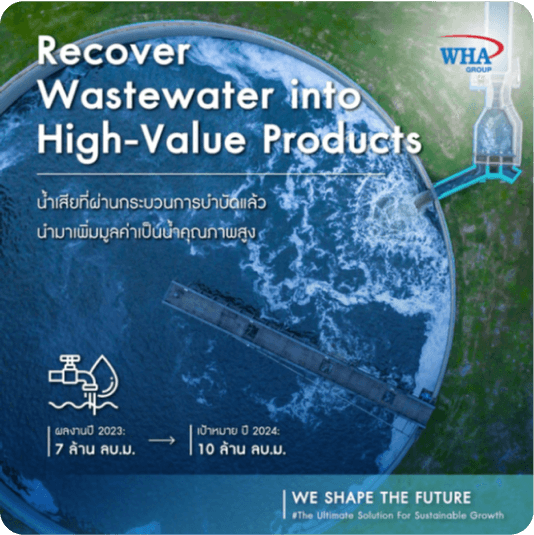
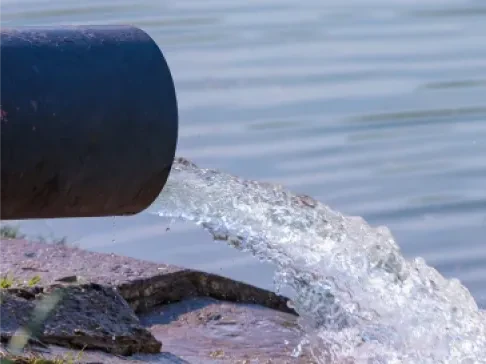
Recovering Wastewater into High-Value Products
WHA Group treats wastewater and transforms it into high-quality water for various purposes. In 2025, the volume of water reclamation for sale is 8.8 million cubic meters per year which translates into the savings of natural water extraction of 9.5 million cubic meters per year
Target: The Company sets the long-term target to increase the volume of water reclamation sales to 24.25 million cubic meters per year which translates into the savings of natural water extraction of 25 million cubic meters annually by 2030.
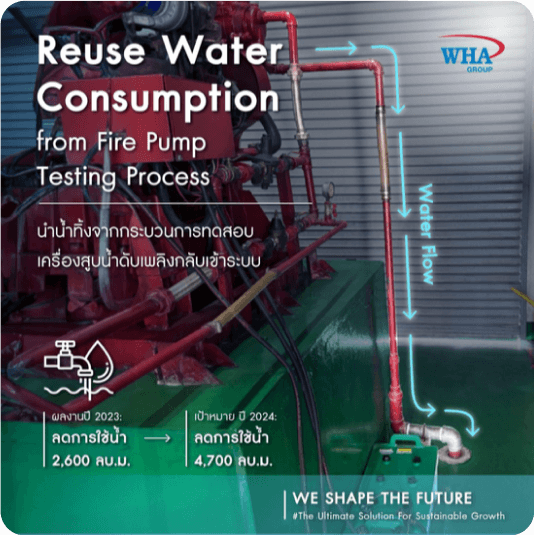
Reusing Water from Fire Pump Testing
This initiative involves recycling water used for testing fire pumps, reducing water consumption and minimizing waste. Achievement: In 2023, the project saved 2,600 cubic meters of water.
Target: The goal for 2024 is to achieve a water saving of 4,700 cubic meters. These examples showcase WHA Group's commitment to implementing circular economy principles across its operations. By embracing innovation and collaboration, they are setting an example for sustainable industrial practices and contributing to a more environmentally conscious future.
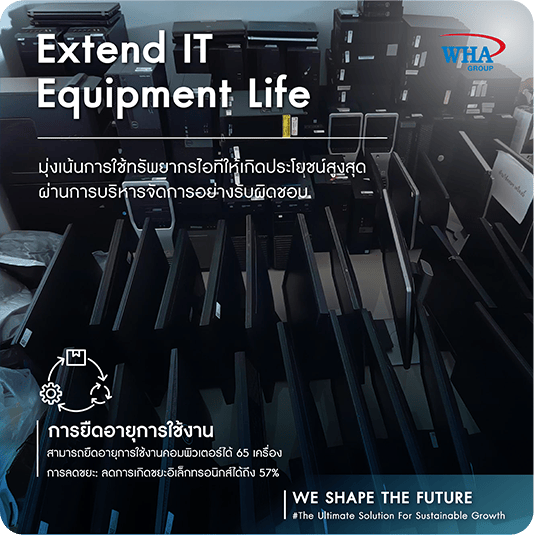
Extend IT Equipment Life
As part of WHA’s IT 5-Year Strategic Direction (2024), this initiative focuses on maximizing the lifecycle of IT assets through responsible disposal, recycling, and repurposing. Under a flexible policy, computers are typically replaced every 5 years and network equipment every 7 years, though extensions are granted based on actual functionality and user needs. End-of-life devices are refurbished or repurposed for non-critical tasks to minimize e-waste and optimize resource use.
Progress:
Life Extension: Successfully extended the use of 65 out of 114 planned computer replacements.
Waste Reduction: Achieved a 57% reduction in e-waste within the 2025 program scope.
Resource Recovery: Disassembled parts (RAM, HDD) are salvaged as spares; obsolete equipment is resold, repurposed, or recycled.
These examples showcase WHA Group's commitment to implementing circular economy principles across its operations. By embracing innovation and collaboration, they are setting an example for sustainable industrial practices and contributing to a more environmentally conscious future.