






SUSTAINABLE CONSTRUCTION MATERIALS
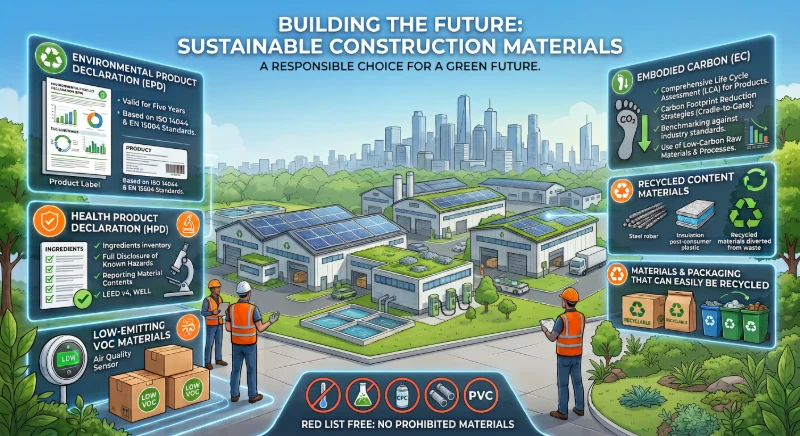
WHA Group applies life cycle-based approaches to reduce greenhouse gas (GHG) emissions and environmental impacts across our operations and project development. This includes the use of Life Cycle Assessment (LCA) in core utility processes and the integration of environmental and health criteria in building material selection. These approaches enable us to systematically evaluate environmental impacts across the value chain, support circular economy practices, and enhance resource efficiency and environmental performance over the full life cycle of our activities and assets.
We incorporate environmental criteria into building material selection by prioritizing materials with Carbon Footprint Product (CFP) Certificated from Thailand Greenhouse Gas Management Organization (Public Organization) or "TGO" and Environmental Product Declarations (EPD). The use of EPD-certified materials enables transparent disclosure and evaluation of environmental impacts, including carbon footprint, resource use, and other life cycle indicators, supporting informed decision-making and alignment with international standards. This approach enhances transparency on environmental and health attributes of materials and contributes to reducing life cycle impacts in construction and infrastructure development. In 2025, EPD-certified materials were applied in selected industrial estate at ESIE 5 for Hydraulic Cement.
We integrate sustainability considerations into material specifications with a strong focus on environmental and health attributes to minimize indoor air pollutants and occupant health and well-being. This includes the selection of low-emitting volatile organic compound (VOC) materials, such as precast, paints, coatings, adhesives, sealants, and flooring, in warehouses and office buildings. In addition, the Group promotes the use of materials and packaging that can be reused or easily recycled to improve resource efficiency and reduce environmental impacts. This includes UPVC roof gutters reducing construction and hazardous waste through their durable, paint-free, and recyclable properties, while also supporting rainwater harvesting for resource circularity and concrete materials that can be reformed into paving blocks for use in walkways, footpaths, and roadside applications, supporting circular material use across project developments. (For more details, see “Paving Blocks from Construction Waste Project”)
Locally extracted or recovered materials
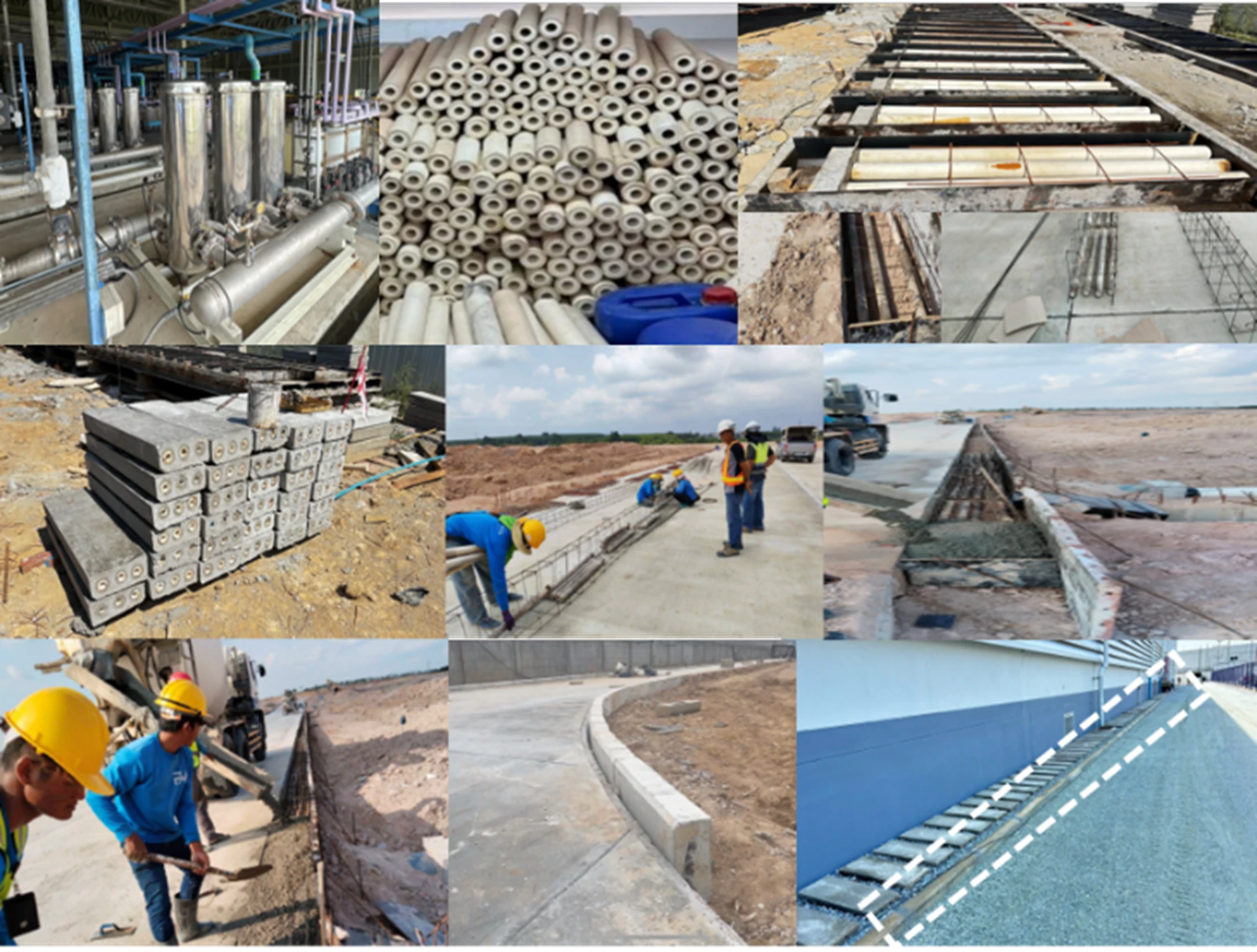
- Cartridge filter to Concrete curbs: WHA Group applies circular economy principles by recycling the cartridge filter waste from reclamation water plants to construct concrete curbs for roadside curbs within WHA properties, reducing construction waste and lowering the need to purchase new materials.
Rapidly renewable materials and recycled content materials
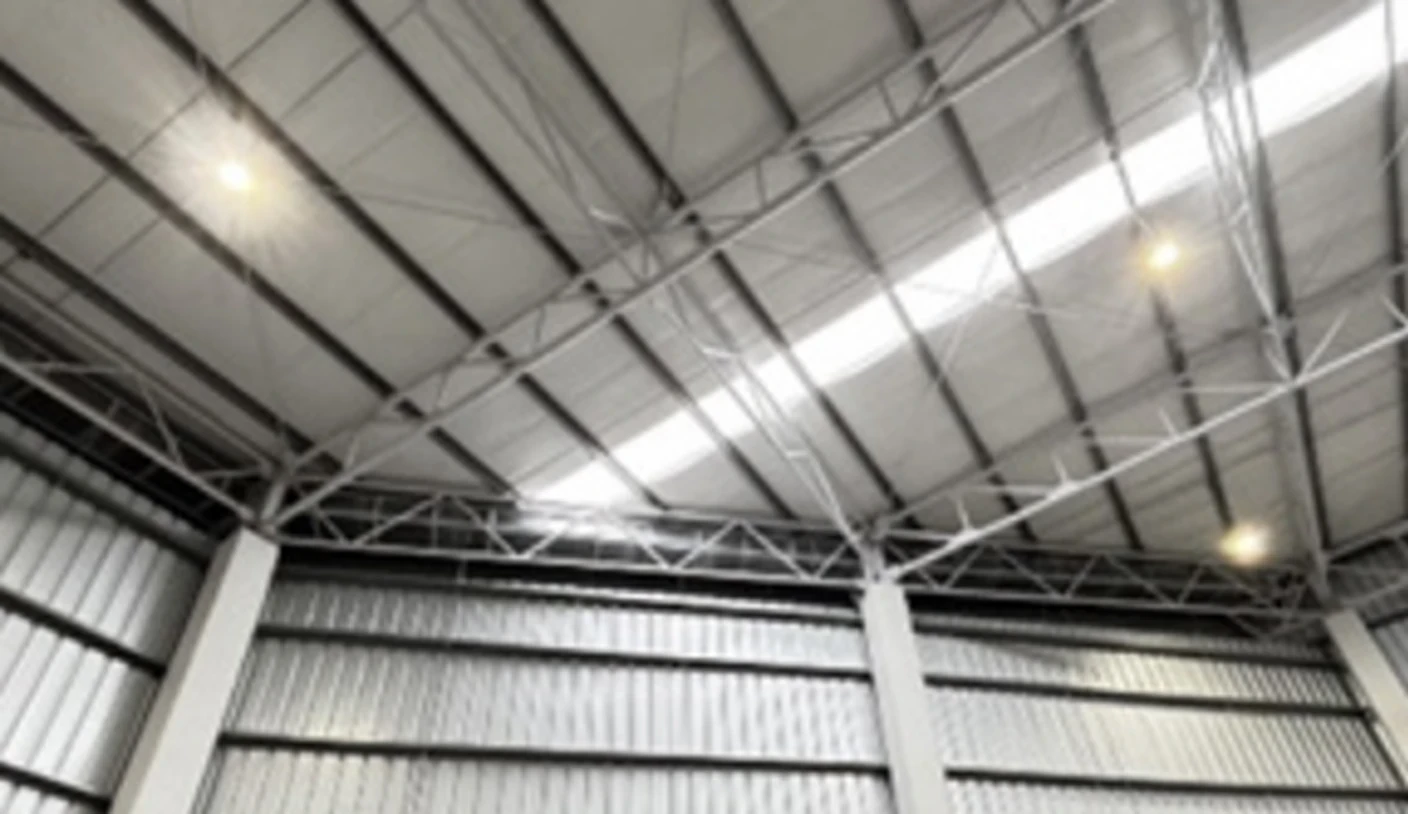
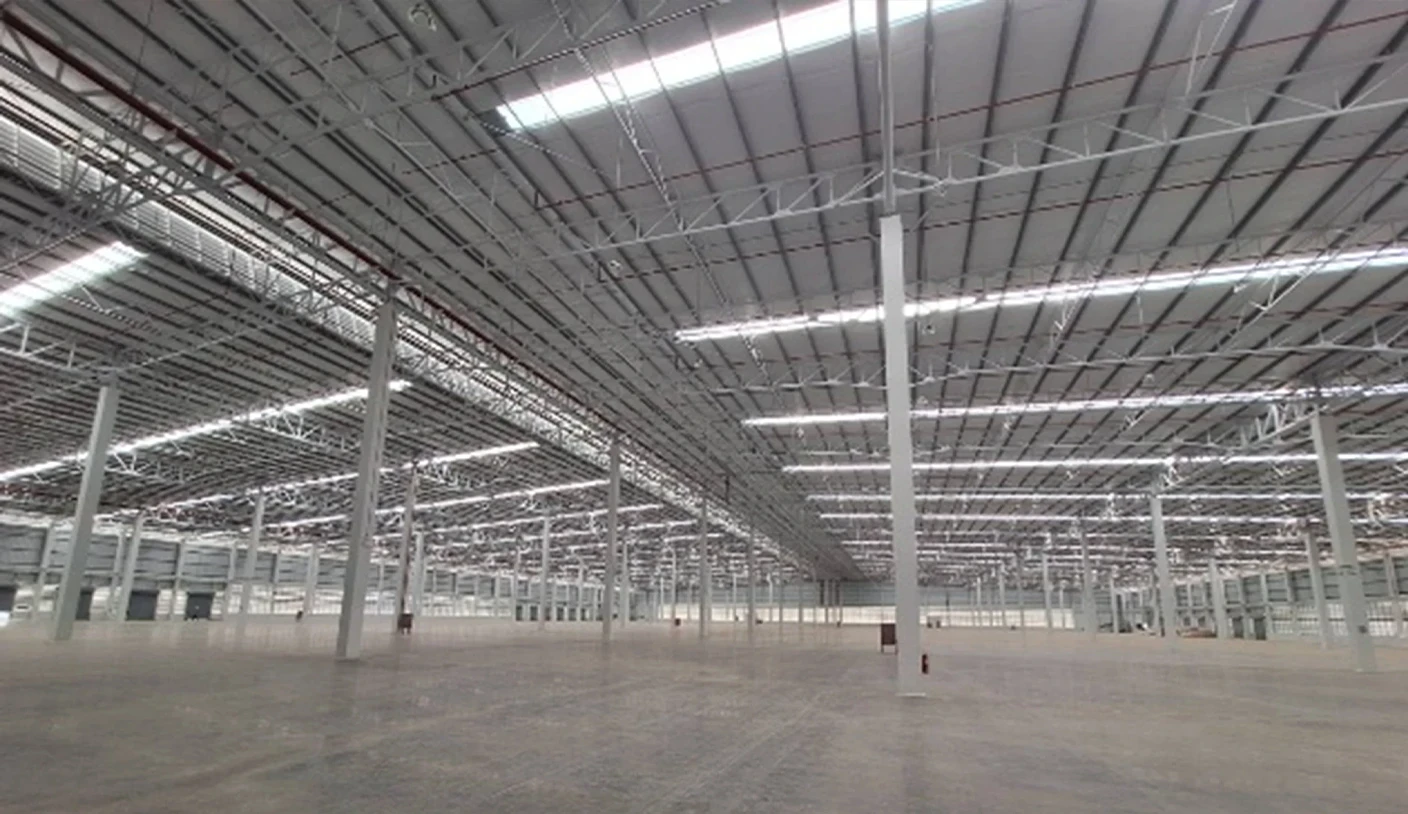
- Insulating Roof: Insulating materials are installed beneath the roof, featuring ventilation holes that help reduce heat inside the building and maintain the quality of stored products.
Low embodied carbon materials
- Hydraulic Cement
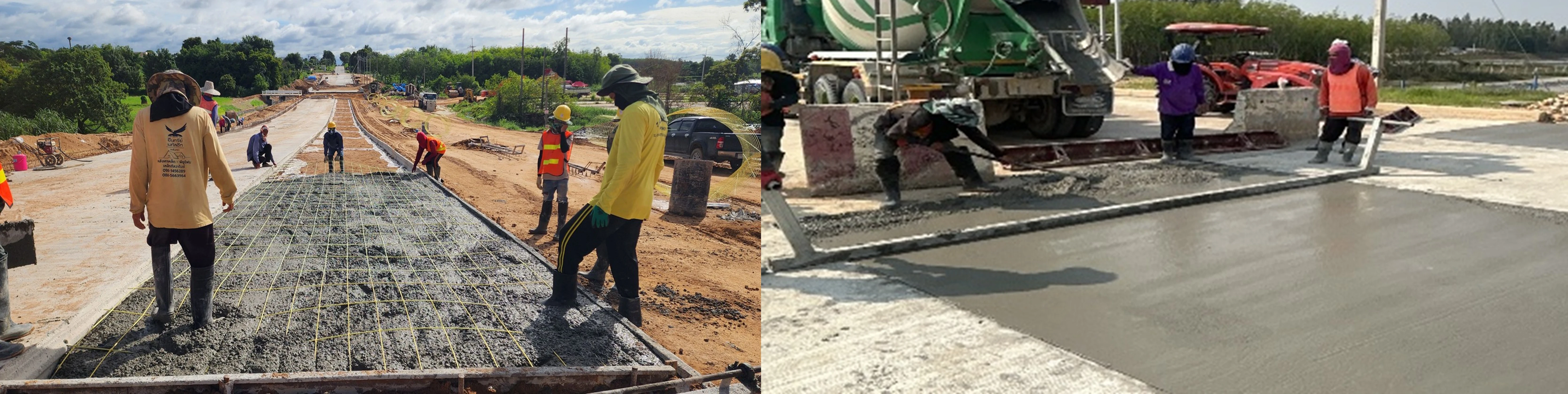
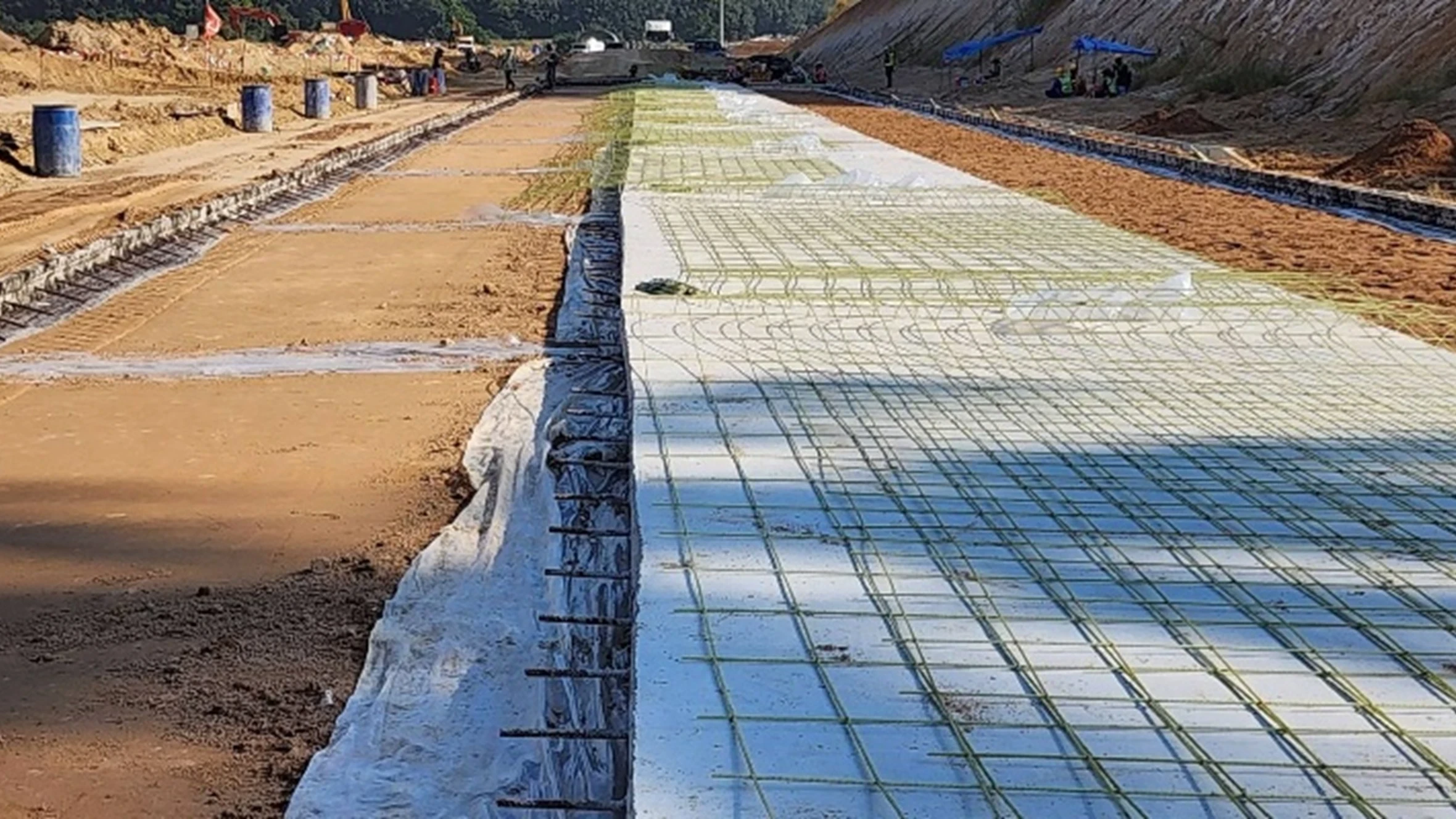
- Glass Fiber Reinforced Polymer (GFRP)
Environmental Product Declaration (EPD)
- Our products/materials are certified with Environmental Product Declarations (EPDs) in accordance with international standards, including ISO 14025, ISO 14040 and ISO 14044. The declarations are based on publicly available, independently reviewed Life-Cycle Assessment (LCA) data, ensuring transparency and demonstrating our commitment to environmental sustainability.
SCG Low Carbon Structural Bag Cement
CPAC Normal concrete 280 KSC
(C24/28, MPa)
Materials and packaging that can easily be recycled
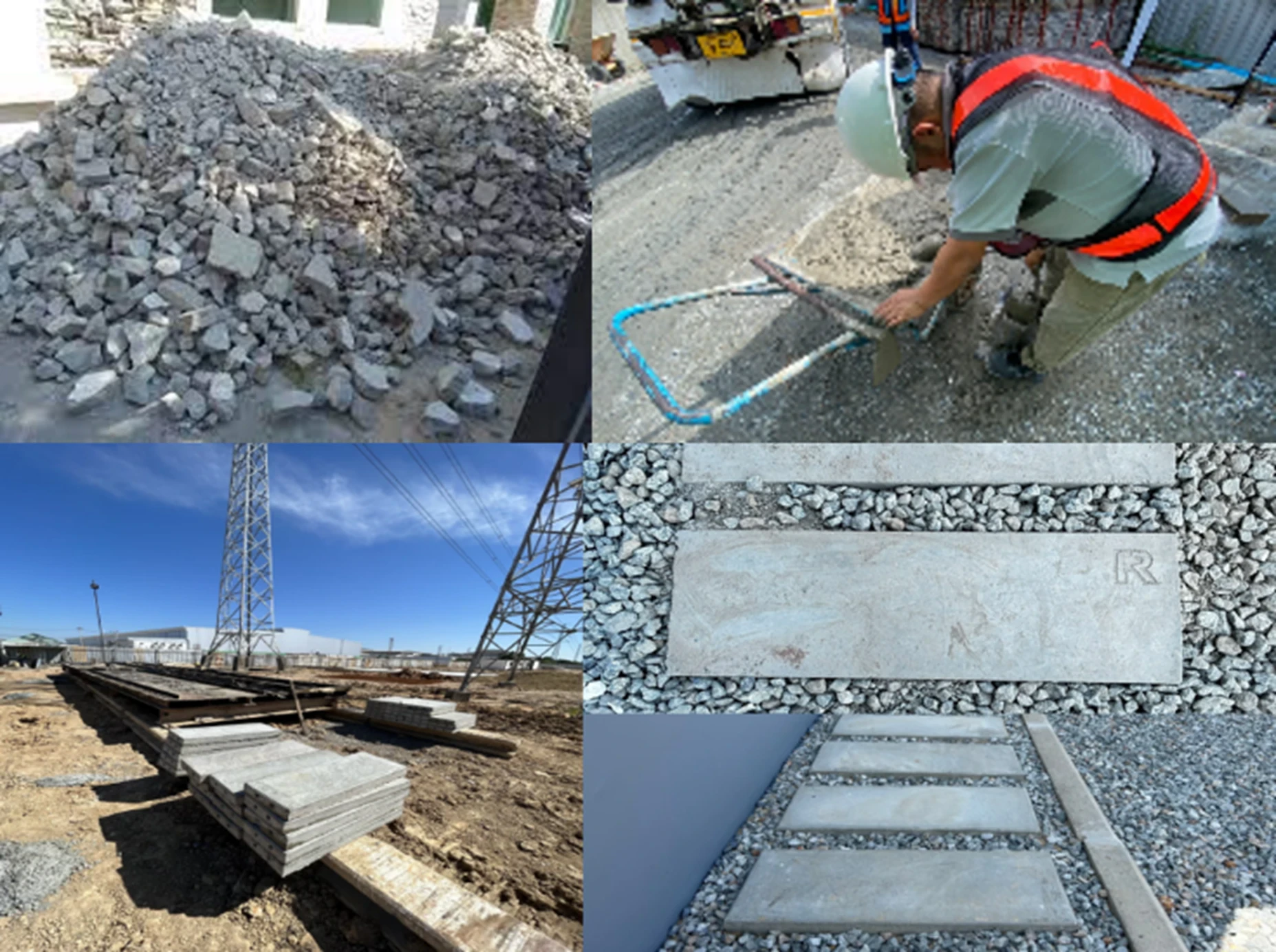
- Concrete Material: WHA Group uses concrete material that can easily be reformed into paving blocks. The recycled blocks are used for footpaths around office buildings, walkways adjacent to warehouse facilities, and roadside curbs within WHA properties, reducing construction waste and lowering the need to purchase new materials. WHA Group applies circular economy principles by setting a target for our construction and demolition projects to recycle 100% of leftover concrete waste into paving blocks.
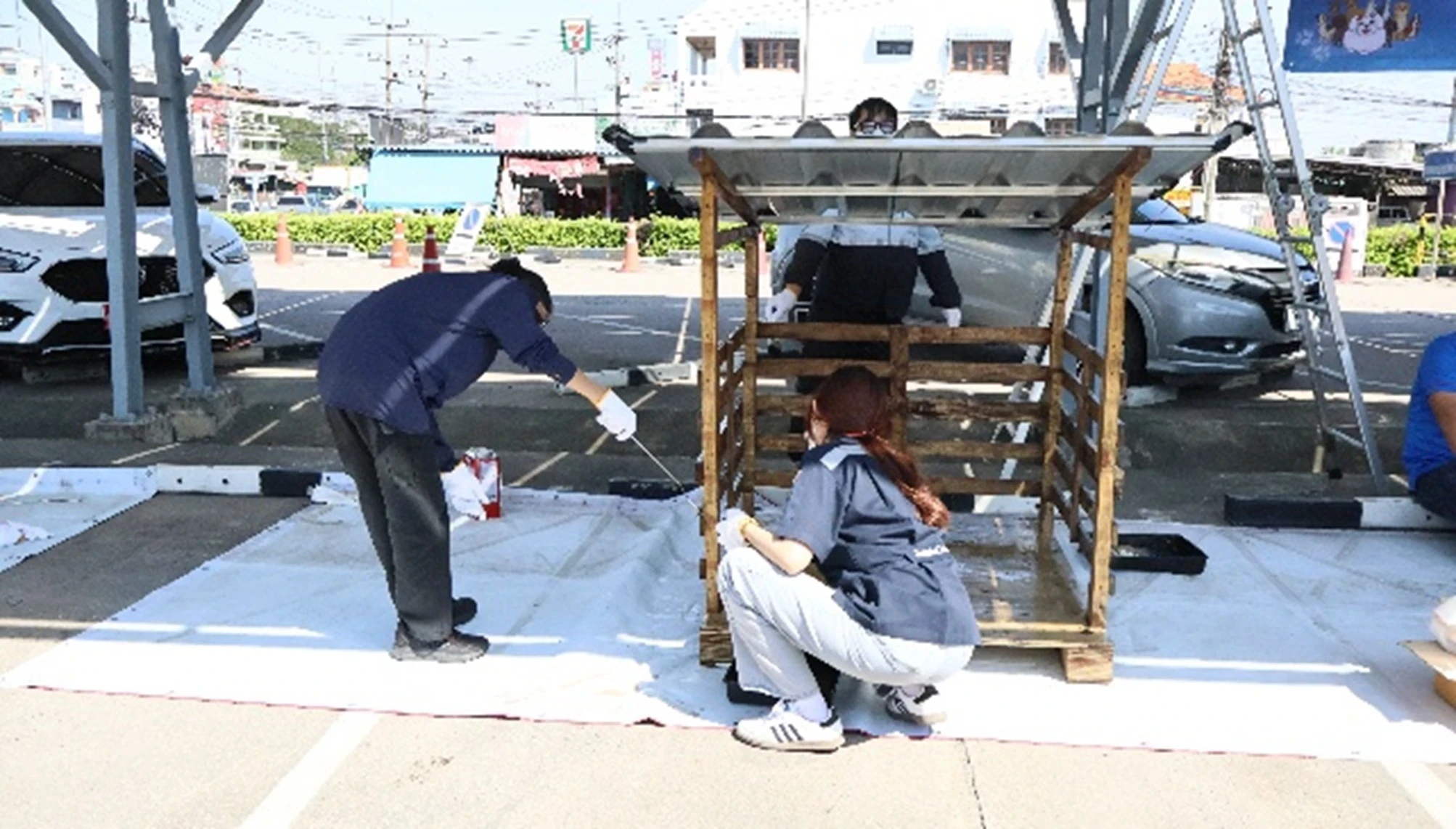
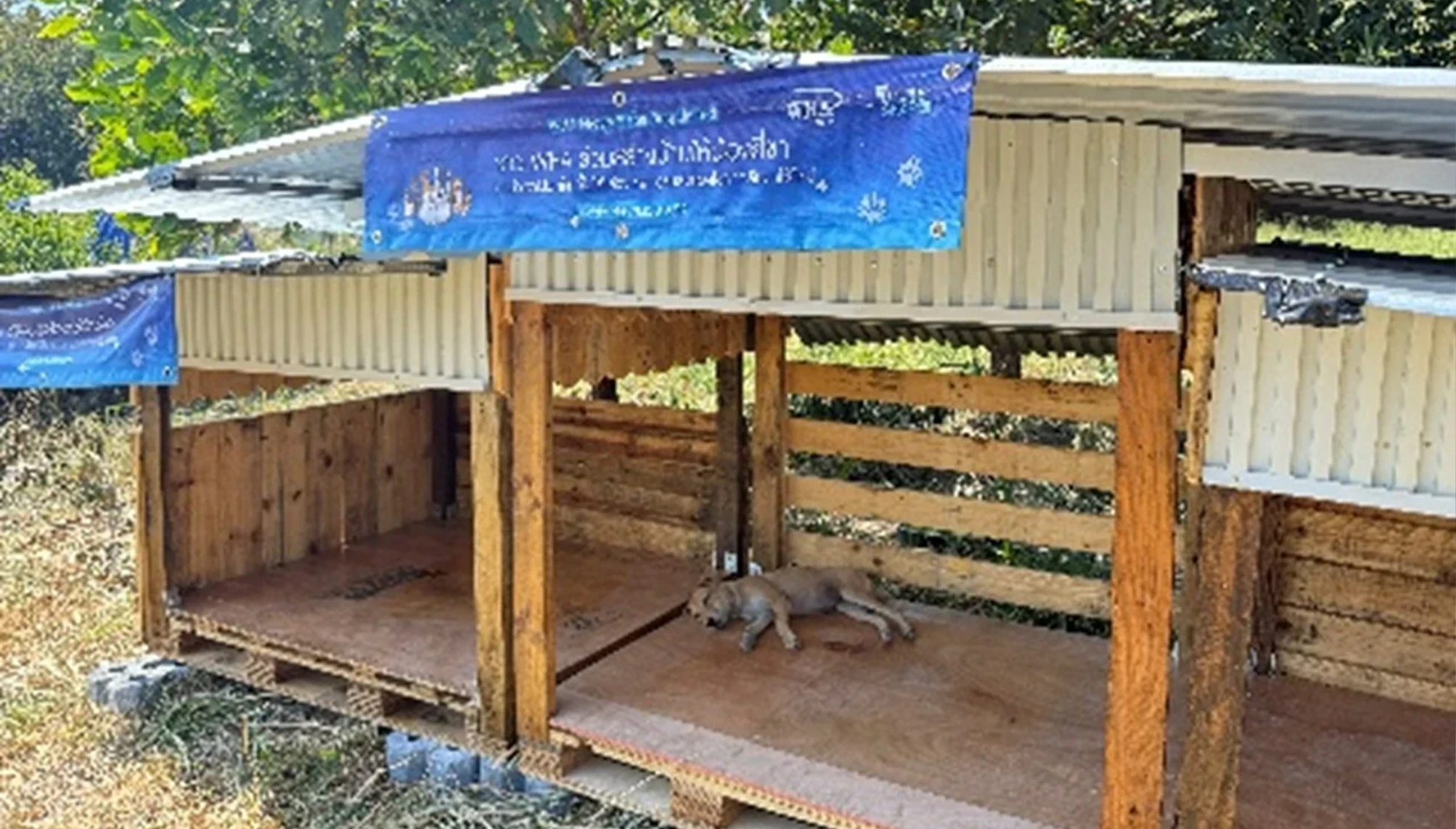
- The Dog Shelter Project Using Recycled Wooden Pallets from Solar Cell Packaging: WHA Group utilizes recycled wooden pallets from solar panel packaging to construct 11 dog shelters, promoting efficient resource utilization in line with the 3Rs policy: Reduce, Reuse, and Recycle, and supporting environmental sustainability to the dog foundation. The project was implemented in Mae Nam Khu Subdistrict, Pluak Daeng District, Rayong Province.