






ประเด็นสำคัญด้านความยั่งยืน ปี 2568
ผลการประเมินประเด็นสำคัญด้านความยั่งยืนถูกนำไปใช้ในการกำหนดกลยุทธ์องค์กรและบูรณาการเข้ากับกระบวนการบริหารความเสี่ยงของกลุ่มบริษัทฯ เพื่อให้มั่นใจว่ากลุ่มบริษัทฯ มีความพร้อมในการบริหารจัดการความเสี่ยงและโอกาสด้านความยั่งยืนได้อย่างมีประสิทธิภาพ โดยมีคณะกรรมการบรรษัทภิบาลและการพัฒนาอย่างยั่งยืน ซึ่งเป็นคณะย่อยภายใต้คณะกรรมการบริษัท ทำหน้าที่ทบทวน จัดลำดับความสำคัญ และอนุมัติประเด็นสำคัญด้านความยั่งยืน
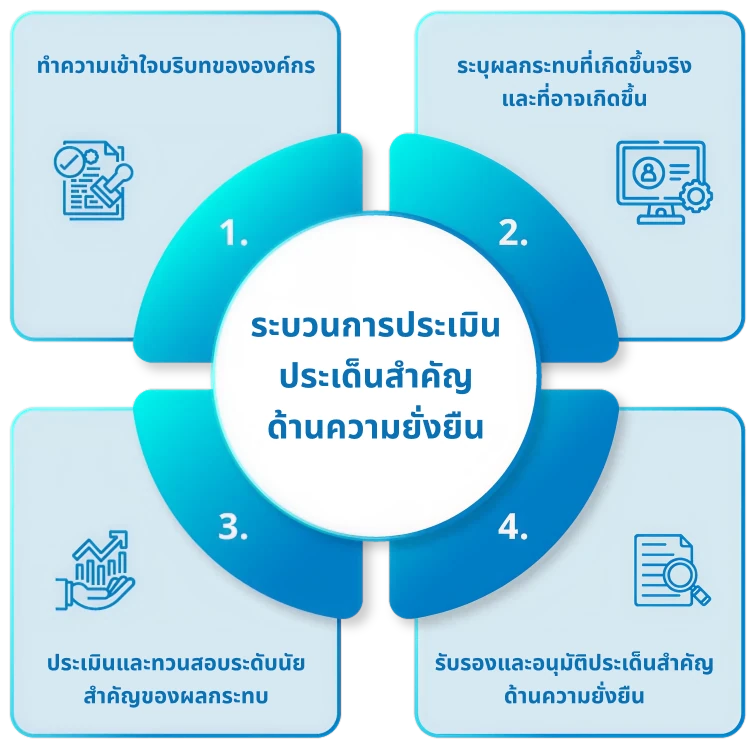
กระบวนการประเมินประเด็นสำคัญด้านความยั่งยืน
กลุ่มบริษัทดับบลิวเอชเอวิเคราะห์บริบทการดำเนินงานขององค์กรโดยพิจารณาแนวโน้มด้านความยั่งยืนในระดับโลก และเฉพาะอุตสาหกรรม พัฒนาการด้านกฎหมายและกฎระเบียบ ประเด็นด้านความยั่งยืนที่เปิดเผยโดยบริษัทชั้นนำในอุตสาหกรรม ตลอดจนข้อมูลเชิงลึกจากงานวิจัยและกรอบมาตรฐานสากลที่ได้รับการยอมรับในระดับสากล โดยการวิเคราะห์ดังกล่าวครอบคลุมทั้งปัจจัยระยะสั้นและระยะยาวที่เกี่ยวข้องกับทั้ง 5 กลุ่มธุรกิจหลักของกลุ่มบริษัทฯ
จากการทบทวนดังกล่าว กลุ่มบริษัทฯ ได้จัดทำรายการประเด็นสำคัญด้านความยั่งยืนเบื้องต้นจำนวน 16 ประเด็น ครอบคลุมมิติด้านสิ่งแวดล้อม สังคม และบรรษัทภิบาล (ESG) โดยคัดเลือกจากประเด็นที่มีหรืออาจมีผลกระทบต่อสิ่งแวดล้อม สังคม ผู้มีส่วนได้เสีย และการดำเนินธุรกิจของกลุ่มบริษัทฯ เพื่อใช้เป็นพื้นฐานสำหรับการประเมินในขั้นตอนถัดไป
กลุ่มบริษัทดับบลิวเอชเอระบุผลกระทบที่เกิดขึ้นจริงและที่อาจเกิดขึ้นตลอดห่วงโซ่คุณค่า โดยอาศัยกระบวนการมีส่วนร่วมของผู้มีส่วนได้เสียผ่านการสัมภาษณ์และแบบสำรวจออนไลน์ในประเด็นสำคัญด้านความยั่งยืนที่ได้รับการคัดเลือกไว้เบื้องต้น ความคิดเห็นและข้อมูลถูกจัดเก็บจากทั้งผู้มีส่วนได้เสียภายใน ได้แก่ พนักงานและผู้บริหารจากแต่ละกลุ่มธุรกิจ และผู้มีส่วนได้เสียภายนอก ได้แก่ คู่ค้า ชุมชน พันธมิตรธุรกิจ หน่วยงานกำกับดูแล และสถาบันการเงิน แต่ละประเด็นได้รับการประเมินตามหลักการทวิสารัตถภาพ (Double Materiality Principle) ผ่าน 2 มิติ ดังนี้
- สาระสำคัญด้านผลกระทบ (Impact Materiality): พิจารณาผลกระทบด้านสิ่งแวดล้อมและสังคม รวมถึงประเด็นด้านสิทธิมนุษยชนและผลกระทบต่อผู้มีส่วนได้เสียที่เกิดจากการดำเนินงานของกลุ่มบริษัทฯ และห่วงโซ่คุณค่า
- สาระสำคัญด้านการเงิน (Financial Materiality): ซึ่งพิจารณาผลกระทบของประเด็นด้านความยั่งยืนที่มีต่อผลการดำเนินงานทางการเงินและการสร้างคุณค่าขององค์กร
ทั้งสองมิติได้รับการประเมินโดยพิจารณาจากความรุนแรงของผลกระทบและโอกาสในการเกิดขึ้น รวมถึงขนาดของผลที่ตามมา และความสามารถของกลุ่มบริษัทฯ ในการบริหารจัดการหรือบรรเทาความเสี่ยงที่เกี่ยวข้อง
กลุ่มบริษัทดับบลิวเอชเอจัดการประชุมเชิงปฏิบัติการภายในร่วมกับผู้บริหารและบุคลากรที่เกี่ยวข้องจากทั้ง 5 กลุ่มธุรกิจหลัก เพื่อทบทวน หารือ และทวนสอบผลการประเมินประเด็นสำคัญด้านความยั่งยืน นอกจากนี้กลุ่มบริษัทฯ ยังได้นำกระบวนการดังกล่าวไปหารือร่วมกับผู้เชี่ยวชาญด้านความยั่งยืนในภาคอสังหาริมทรัพย์เพื่อให้มั่นใจว่าประเด็นที่ได้รับการระบุสะท้อนถึงประเด็นความยั่งยืนที่มีความสำคัญ และสอดคล้องกับพัฒนาการของอุตสาหกรรมอย่างเหมาะสม
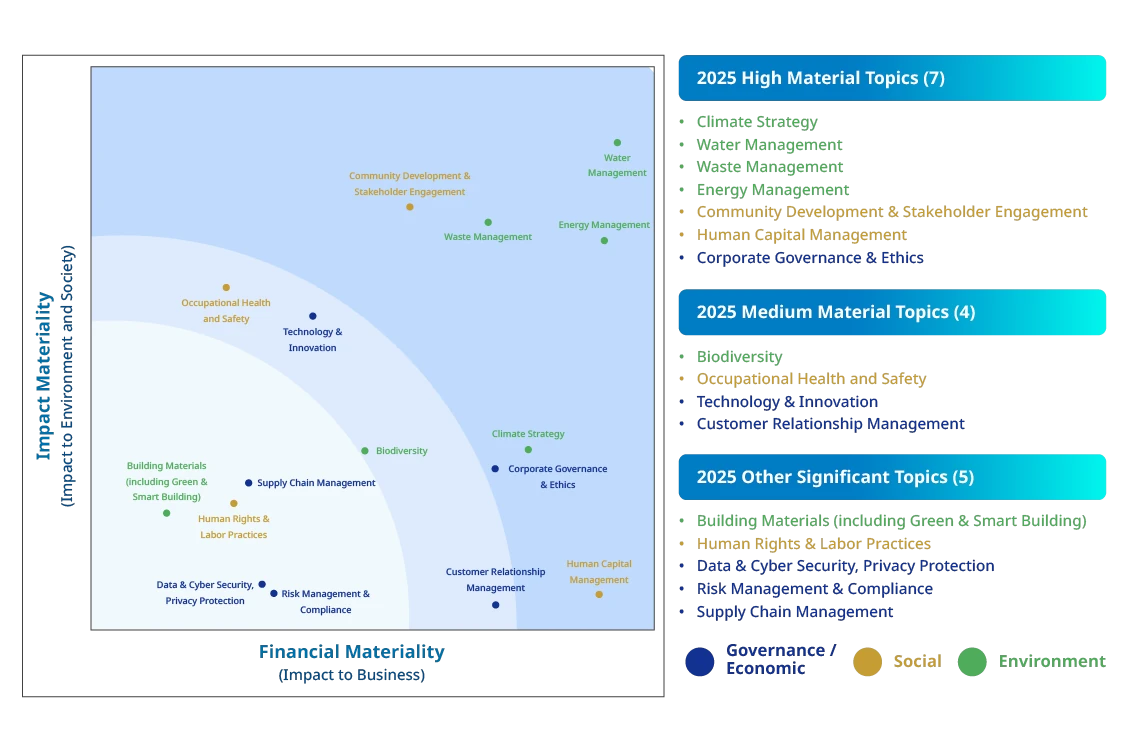
ผลการประเมินถูกสรุปในรูปแบบของเมทริกซ์ประเด็นสำคัญด้านความยั่งยืน (Materiality Matrix) โดยจัดลำดับความสำคัญของแต่ละประเด็นตามระดับผลกระทบต่อสังคมและสิ่งแวดล้อม รวมถึงความสำคัญต่อธุรกิจ ภายใต้การพิจารณามาตรการบริหารจัดการและลดผลกระทบที่กลุ่มบริษัทฯ ได้ดำเนินการอยู่แล้วในแต่ละประเด็น ในการประเมินความสำคัญในทั้งสองมิติ ประเด็นด้านความยั่งยืนถูกจัดออกเป็น 3 ระดับ ได้แก่ ประเด็นสำคัญด้านความยั่งยืนที่มีนัยสำคัญสูง (High Material Topics) ประเด็นสำคัญด้านความยั่งยืนที่มีนัยสำคัญปานกลาง (Medium Material Topics) และประเด็นด้านความยั่งยืนที่มีความสำคัญอื่น ๆ (Other Significant Topics) จากนั้น จึงนำเสนอประเด็นสำคัญด้านความยั่งยืนทั้งหมดและผลการประเมินต่อฝ่ายบริหารและคณะกรรมการระดับคณะกรรมการบริษัทเพื่อพิจารณาทบทวน
ประเด็นสำคัญด้านความยั่งยืนที่ได้รับการจัดลำดับความสำคัญจะได้รับการทบทวนและรับรองโดยคณะกรรมการบริหาร (Executive Committee) ก่อนนำเสนอต่อคณะกรรมการบรรษัทภิบาลและการพัฒนาอย่างยั่งยืน (Corporate Governance and Sustainable Development Committee: CGSD) ซึ่งเป็นคณะย่อยภายใต้คณะกรรมการบริษัท เพื่อพิจารณาทบทวนและอนุมัติขั้นสุดท้าย
ประเด็นสำคัญด้านความยั่งยืนที่ได้รับการอนุมัติจะถูกนำมาใช้เป็นแนวทางในการกำหนดกลยุทธ์ด้านความยั่งยืนของกลุ่มบริษัทฯ สำหรับปี 2568 และบูรณาการเข้าสู่กระบวนการบริหารความเสี่ยงองค์กร (Enterprise Risk Management: ERM) นอกจากนี้ ประเด็นดังกล่าวยังใช้เป็นพื้นฐานสำคัญในการกำหนดขอบเขตและเนื้อหาการเปิดเผยข้อมูลในรายงานความยั่งยืนประจำปี 2568
ประเด็นสำคัญด้านความยั่งยืน
จากกระบวนการประเมินประเด็นสำคัญด้านความยั่งยืนข้างต้น กลุ่มบริษัทดับบลิวเอชเอได้ดำเนินการประเมินโดยสอดคล้องกับมาตรฐานการรายงานของ Global Reporting Initiative (GRI Standards) และหลักการทวิสารัตถภาพ (Double Materiality Principle) อย่างครบถ้วน
ในการประเมินปี 2568 กลุ่มบริษัทฯ ได้ระบุประเด็นสำคัญด้านความยั่งยืนจำนวนทั้งสิ้น 16 ประเด็น ประกอบด้วย ประเด็นที่มีนัยสำคัญสูง (High Material Topics) จำนวน 7 ประเด็น ประเด็นที่มีนัยสำคัญปานกลาง (Medium Material Topics) จำนวน 4 ประเด็น และประเด็นด้านความยั่งยืนที่มีความสำคัญอื่น ๆ (Other Significant Topics) จำนวน 5 ประเด็น
นอกจากนี้ กลุ่มบริษัทฯ ได้เปลี่ยนชื่อประเด็นบางประเด็นเพื่อให้สะท้อนขอบเขต และแนวทางการบริหารจัดการได้ชัดเจนยิ่งขึ้น ได้แก่ประเด็นการพัฒนาชุมชน (Community Development) เป็นการพัฒนาชุมชนและการมีส่วนร่วมของผู้มีส่วนได้เสีย (Community Development and Stakeholder Engagement) ประเด็นการรักษาความมั่นคงปลอดภัยไซเบอร์ (Data and Cyber Security) เป็นการรักษาความมั่นคงปลอดภัยไซเบอร์และการคุ้มครองข้อมูลส่วนบุคคล (Data and Cyber Security and Privacy Protection) และประเด็นสิทธิมนุษยชน (Human Rights) เป็นสิทธิมนุษยชนและแนวปฏิบัติด้านแรงงาน (Human Rights and Labor Practices)
ผลการประเมินในปี 2568 พบว่าประเด็นการบริหารจัดการทุนมนุษย์ (Human Capital Management) ได้รับการยกระดับเป็นประเด็นที่มีนัยสำคัญสูง ประเด็นความหลากหลายทางชีวภาพ (Biodiversity) ได้รับการยกระดับเป็นประเด็นที่มีนัยสำคัญปานกลาง ประเด็นเทคโนโลยีและนวัตกรรม (Technology and Innovation) และอาชีวอนามัย และความปลอดภัย (Occupational Health and Safety) ถูกจัดให้อยู่ในกลุ่มประเด็นที่มีนัยสำคัญปานกลาง เป็นไปตามผลการมีส่วนร่วมกับผู้มีส่วนได้เสีย ตลอดจนการเปลี่ยนแปลงของบริบทการดำเนินงานและแนวโน้มด้านความยั่งยืน
ประเด็นสำคัญด้านความยั่งยืนและผลกระทบที่เกี่ยวข้องจากการประเมินตามหลักการทวิสารัตถภาพ สรุปได้ดังตารางต่อไปนี้
MATERIAL TOPICS MANAGEMENT
| Report Dimension | High Material Topics | Key Stakeholders and Impact Boundary | Positive (+) and Negative (-) Impacts | Contributions to SDGs | GRI | |
|---|---|---|---|---|---|---|
| Internal | External | |||||
| Governance/ Economic | Corporate Governance and Ethics | Employee |
|
Impacts on Environment / Stakeholders: Effective, transparent, and accountable governance practices, together with the promotion of ethics and anti-corruption through employee training, help protecting stakeholders from unethical conduct, corruption and unfair business practices (+) Impacts on Business: Integration of ESG principles into operations and sustainability practices strengthens effective and sustainable corporate governance which builds stakeholder trust (+) |
  |
GRI 205: Anti-corruption GRI 206: Anti-competitive Behavior |
| Social | Community Development and Stakeholder Engagement | Employee |
|
Impacts on Environment / Stakeholders: Community engagement support local needs, contribute to education, skills development, and employment opportunities, and improve local economic development and quality of life (+) Impacts on Business: Failure to build and maintain strong community relationships may lead to reputational risks, community opposition, operational disruptions, and loss of social license to operate (-) |
    |
GRI 201: Economic Performance GRI 413: Local Communities |
| Human Capital Management | Employee | - | Impacts on Environment / Stakeholders: Not Specified Impacts on Business: Attracting and retaining talent supports operational performance and strategic success; employee training and reskilling enhance workforce capabilities (+) |
 |
GRI 401: Employment GRI 404: Training and Education GRI 405: Diversity and Equal Opportunity GRI 406: Non-discrimination GRI 407: Freedom of Association and Collective Bargaining |
|
| Environment | Climate Strategy | Employee |
|
Impacts on Environment / Stakeholders:
|
    |
GRI 201: Economic Performance GRI 305: Emissions |
| Energy Management | Employee |
|
Impacts on Environment / Stakeholders: Provision of renewable and alternative energy solutions, energy efficiency measures, and EV infrastructure enables customers to access cleaner energy options, reduce greenhouse gas emissions, and improve environmental performance (+) Impacts on Business: Improved energy efficiency and the diversification of energy sources help reduce operational costs and environmental risks while creating new business opportunities and potential revenue (+) |
|
GRI 302: Energy | |
| Water Management | Employee |
|
Impacts on Environment / Stakeholders:
|
  |
GRI 303: Water and Effluents | |
| Waste Management | Employee |
|
Impacts on Environment / Stakeholders: Proper waste management, circular economy practices, waste reduction initiatives, and recycling reduce environmental impacts and landfill waste (+) Impacts on Business: Efficient waste and water management technologies reduce operational costs and create sustainable value (+) |
|
GRI 306: Waste | |
-
2025 WHA Group Material Issues Impact Valuation for External Stakeholdersดาวน์โหลด